Electronics Development | Hardware / Software
Custom electronics development for audio, video and lighting
From idea to finished device
Don't wait.
Describe the problem or the idea, and we will propose a development path with an estimate by phase, no obligation.
Six steps to a device
01 InquiryDescription of the problem or idea
02 SpecificationDefining the requirements
03 DesignElectronics design
04 PrototypePrototype build
05 TestingTesting in real conditions
06 ProductionSeries production
Custom electronics development, from idea to installation and service
When off-the-shelf equipment does not exist or does not do exactly what you need, two options remain, giving up on the idea or developing the device that makes it happen. We are in the business of the latter. We develop custom electronics, from control devices for lighting, audio and video systems to solutions built to specification for companies whose needs the mass market does not cover. With us the hardware and the control software are done by the same team, so the project does not fall apart across three contractors waiting on each other. That approach was forged on projects where ready-made solutions had no answer and the deadline could not wait.
What we develop and for whom
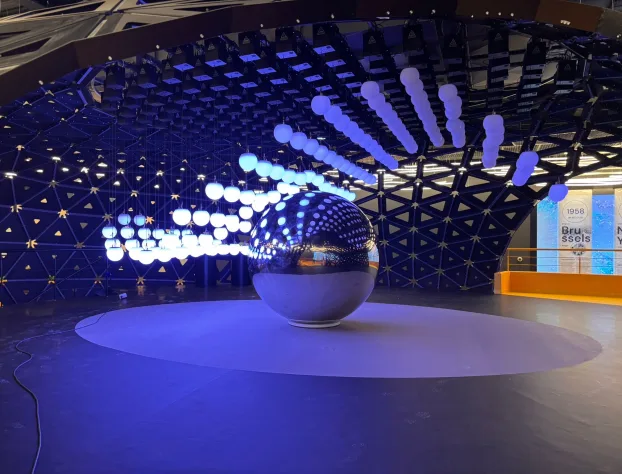
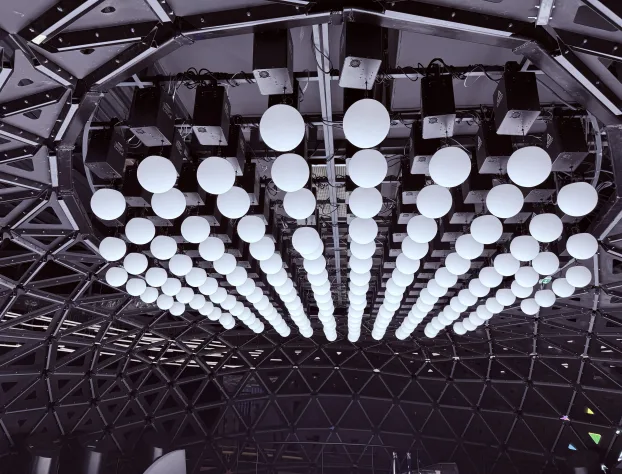
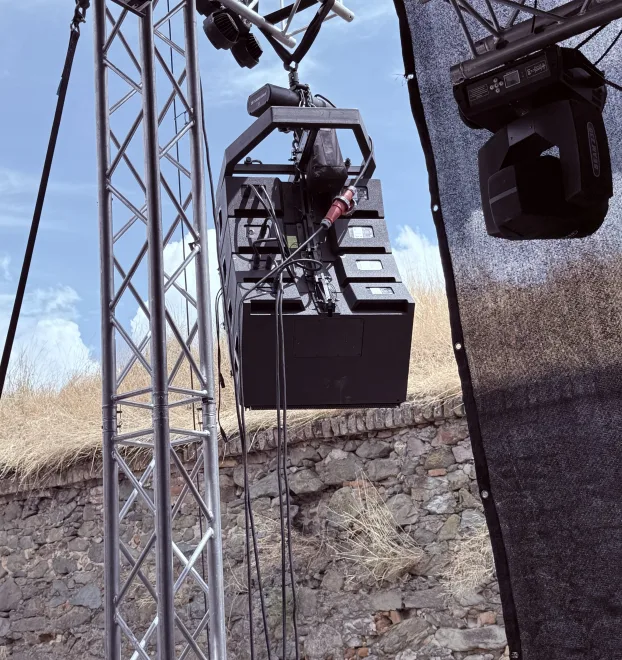
Most of our work is control electronics for DMX and Art-Net control of light and stage, devices we use ourselves at concerts, in clubs and on permanent installations. Beyond that we develop dedicated electronics on request, from controlling a machine on a production line to an installation in a museum or gallery that reacts to a visitor's movement. For cafés, restaurants, shopping malls and business premises we build devices that tie lighting, sound and content into a whole operated by staff with no technical knowledge. We also redesign existing devices; when a manufacturer disappears from the market or a component goes out of production, we rework the electronics, replace what is obsolete and bring the device back to life with documentation that stays with you. Electronics from our workshop today run in clubs and halls, on buildings and in shop windows, on festival stages and in quiet museum installations.
What development looks like
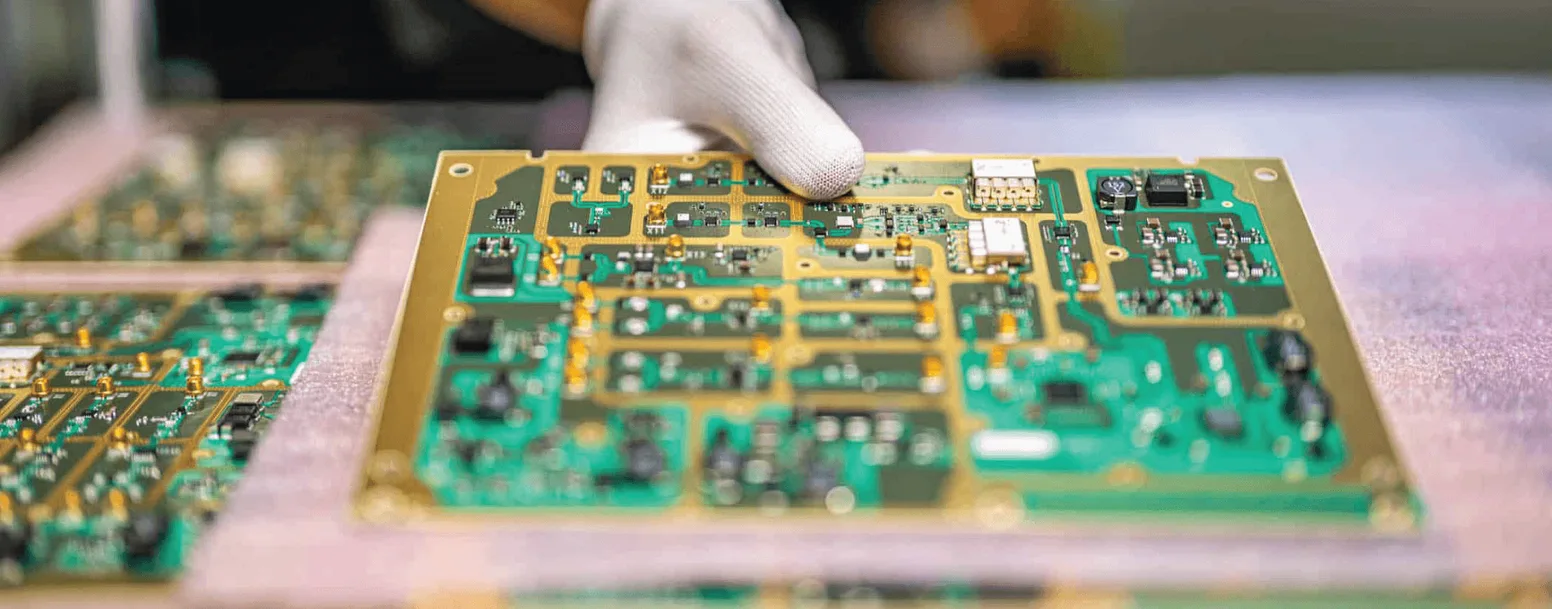
We take the path from idea to series through six steps, from the inquiry and a joint specification, through PCB design and microcontroller programming, to the prototype, testing and series production. We test the prototype in real conditions, in the field, alongside the equipment the device needs to work with, because the lab bench forgives mistakes the stage does not. The price is formed by phase; you know what the specification costs, what the development costs and what the prototype costs, so you enter the project step by step instead of paying for the unknown up front. For companies still validating an idea we build functional prototypes and small series, with no obligation to go straight into large-scale production. Documentation accompanies every step, the schematic, the bill of materials and the manual, so the project does not depend on one person's memory, neither ours nor yours.
Devices that talk to your equipment
Hardly any device works alone. That is why we design electronics to fit into what you already have, DMX and Art-Net chains, audio and video signals, the network, sensors and equipment from other manufacturers. Before delivery we test the device in a real environment, not in the ideal conditions of a schematic, so installation does not open new questions. When a project also calls for a visible part, an application for staff or a screen for visitors, the software team writes the interface alongside the same firmware, so you get one whole, not two products that merely tolerate each other. If the device later needs extending, the same crew adds the function to the firmware instead of you buying a new one.
Development that does not stop on paper
A typical design bureau hands over a schematic and documentation, then leaves you to look for production, an enclosure and software at three other addresses. With us, development, electronics production and enclosure fabrication in our own CNC workshop stand under the same roof, and we source components directly, including through our office in China, so the timeline and the price do not depend on a chain of middlemen. A device we develop we can also install, connect to your existing equipment and service later, because we know what is inside it down to the last line of code. Ownership of the solution is defined by contract, and project confidentiality goes without saying even before signing.
You do not have to arrive with a finished specification; a description of the problem or the idea is enough. From Belgrade we work for clients across Serbia, and devices from our workshop run on projects across Europe and Asia. Let's talk about your idea; an assessment of the development path costs nothing and commits you to nothing, and it usually settles the main question in the very first conversation, whether the idea pays off and which way it should go.
NEXT STEPS